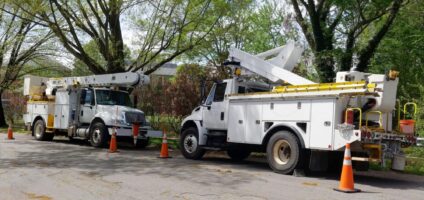
The Short Answer: A truck roll is any time you send a field technician to a customer’s location to diagnose, repair, or install something. For telecom and broadband operators, reducing unnecessary truck rolls is one of the fastest ways to lower operational expenses without cutting service quality.
The reality is that many truck rolls can be avoided entirely. With remote diagnostics, real-time device visibility, and better data at the point of dispatch, operators can resolve more issues without ever sending a truck. And when a truck roll is necessary, connected systems help make sure it only takes one visit
The True Cost of a Truck Roll
Direct Costs
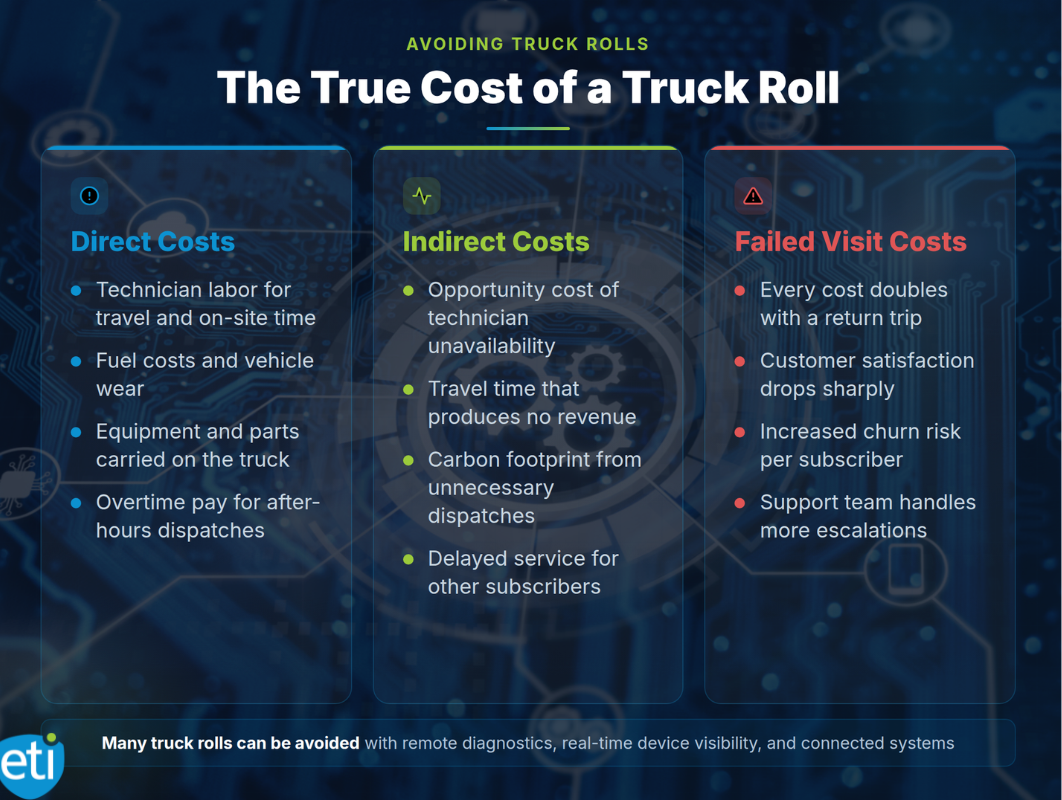
The most visible costs are straightforward: labor costs for the technician’s time, fuel costs for the vehicle, and general vehicle expenses, including wear and tear. However, these items only capture a piece of the picture, as the true cost of a truck roll goes further when considering all other costs.
Indirect Costs
Every truck roll carries costs that don’t show up on an invoice. Travel time is the biggest one. A technician driving 45 minutes each way to a job site is spending an hour and a half producing no revenue. That’s opportunity cost, time that could have been spent on another job or resolving an issue that actually requires hands-on work.
There’s also the carbon footprint impact. For operators managing large service areas with hundreds of daily dispatches, unnecessary truck rolls add up to significant fuel consumption and emissions. That matters increasingly for organizations tracking sustainability goals.
The Cost of a Failed Visit
When a truck roll doesn’t resolve the issue, the math gets worse. An additional trip means every cost doubles: labor, fuel, travel time, and vehicle expense. But the bigger damage is to customer satisfaction.
A subscriber who takes time off work to wait for a technician, only to hear that the problem can’t be fixed today, isn’t just inconvenienced. They’re less likely to stay. Failed visits are one of the fastest ways to turn a minor service issue into a churn risk.
Why Unnecessary Truck Rolls Happen
Incomplete Information at Dispatch
One of the most common reasons for an unnecessary truck roll is that the dispatcher or technician didn’t have the full picture before the truck left. The customer’s service history lives in CRM. Device status lives in a separate monitoring tool. Provisioning records are in another system entirely.
When those systems don’t share data, dispatchers make decisions based on incomplete information. A technician gets sent to troubleshoot a connectivity issue that could have been identified as a provisioning mismatch with a quick look at the right data.
No Remote Diagnostics
Many operators still default to dispatching a technician for any issue that can’t be resolved over the phone. Without real-time visibility into device health and network performance, there’s no way to diagnose the problem remotely before making the call to send a truck.
Issues like a device needing a reboot, a firmware mismatch, or a signal level outside of spec can often be identified and resolved without a site visit. But if your team can’t see the device in real time, a truck roll becomes the default response.
Poor First-Visit Resolution
Even when a truck roll is justified, it only saves money if the technician resolves the issue on the first trip. Poor first-visit resolution happens when:
- The technician arrives without the right parts or equipment because the issue wasn’t properly diagnosed beforehand
- Field notes from previous visits are stuck in a system the technician can’t access on site
- The root cause turns out to be in a different part of the network than what the ticket described
Each of these scenarios leads to a return visit, which means another costly truck roll for the same subscriber and the same issue.
How to Reduce Truck Rolls
Remote Diagnostics and Real-Time Device Visibility
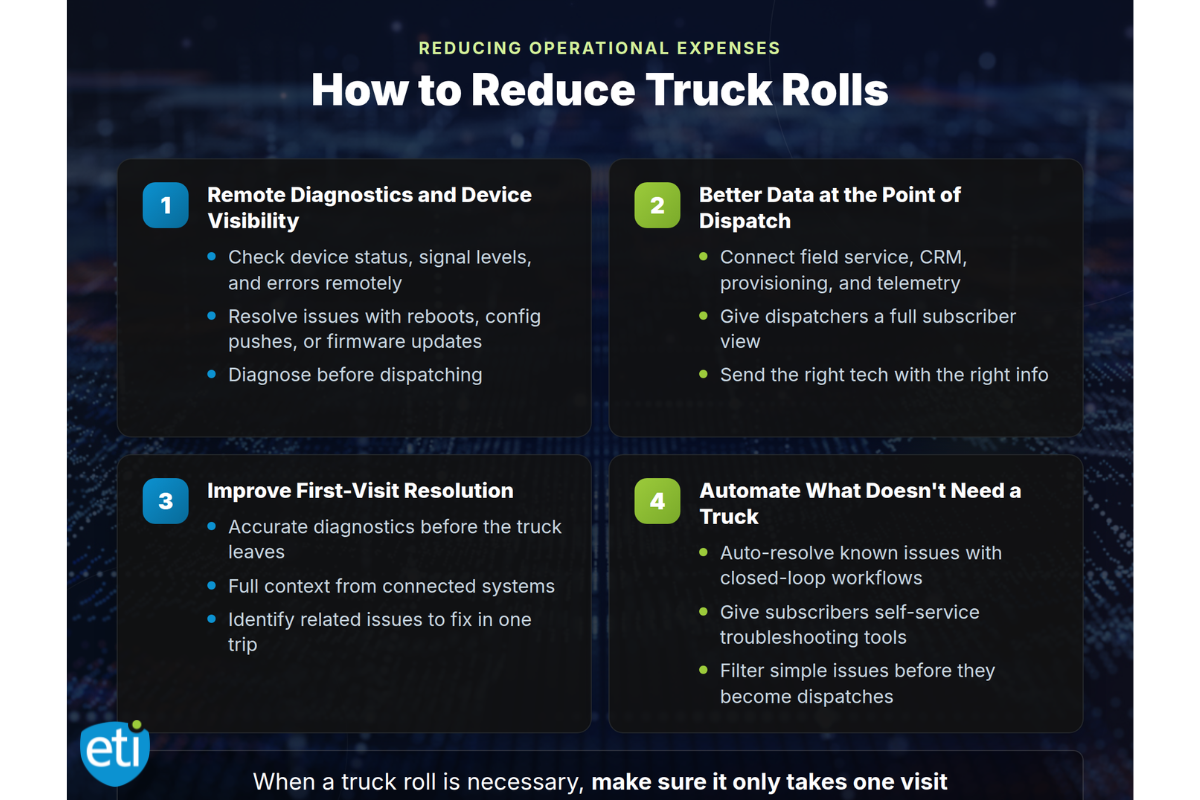
The most effective way to avoid a truck roll is to see what’s happening at the subscriber’s location without sending someone there. Real-time telemetry and device monitoring let your team check signal levels, device status, error rates, and firmware versions remotely before deciding whether a dispatch is necessary.
In many cases, the issue can be resolved with a remote fix. A device reboot, a configuration push, or a firmware update can all happen without a technician stepping into a truck. ETI’s Intelegrate Observe gives operators this kind of real-time device visibility across vendors, so your team can diagnose and act before a truck roll ever enters the conversation.
Better Data at the Point of Dispatch
When a truck roll is necessary, the technician should leave with everything they need to resolve it on the first visit. That means access to the subscriber’s full service history, current device status, provisioning configuration, and any recent network events that might be related.
That only happens when your field service, CRM, provisioning, and telemetry systems are connected. When a dispatcher can see all of that in one view, they send the right technician with the right information to the right location. No guesswork, no wasted trips.
Improve First-Visit Resolution
First-visit resolution is where truck roll costs are either contained or multiplied. Every return visit doubles the expense and damages customer satisfaction.
Improving first-visit rates comes down to three things:
- Accurate diagnostics before dispatch so the technician knows what they’re walking into
- Full context from connected systems so nothing gets missed
- Proactive identification of related issues so the technician can address everything in one trip instead of discovering a second problem after the first one is fixed
Self-Service Options
Not every issue needs your team’s involvement at all. Giving subscribers self-service options for basic troubleshooting, like rebooting a device, checking service status, or running a speed test, can deflect calls and prevent truck rolls from being scheduled in the first place.
Self-service doesn’t replace your support team. It filters out the simple issues, so your team and your technicians can focus on the ones that actually need them.
How ETI Helps Operators Reduce Truck Rolls
ETI’s Intelegrate platform helps operators reduce truck rolls at every stage. Intelegrate Observe provides the remote diagnostics and device visibility to resolve issues without dispatching. Intelegrate Connect ties your systems together so dispatchers and technicians have full context when a visit is required. And Intelegrate Automate can execute remote fixes automatically, eliminating the truck roll entirely for known issues.
Fewer Trucks, Better Results
Not every service issue needs a truck. The operators spending the least on unnecessary dispatches are the ones investing in remote visibility, connected systems, and automated resolution for the issues that don’t require a technician on site.
When a truck roll is necessary, the goal is simple: resolve it on the first visit. That means getting the right data to the right technician before they leave, not after they arrive and discover the ticket didn’t tell the full story.
Start by looking at your most common truck roll reasons. How many could be diagnosed remotely? How many repeat visits are caused by incomplete information at dispatch? Those are the areas where reducing truck rolls will have the fastest impact on your bottom line.
Want to see how this fits your operation? Contact ETI to walk through your field service and remote diagnostics needs.