The following summary has been condensed for length and readability. To listen to the full discussion, click . This episode is sponsored by and .
The broadband industry is entering a new phase. After years focused on network expansion and funding opportunities, service providers are now asking a different question: How do we build sustainable broadband businesses for the long term?
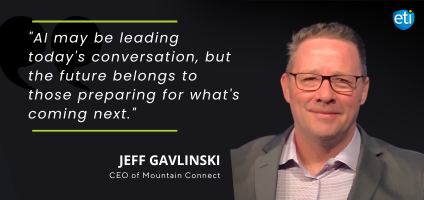
In this episode of The Broadband Bunch, host Pete Pizzutillo speaks with Jeff Gavlinski, CEO of Mountain Connect, about the changing priorities facing internet service providers, the technologies shaping the next decade of broadband, and why industry events must evolve beyond presentations to create meaningful business outcomes.
The Broadband Conversation Is Changing
For much of the past decade, industry discussions centered on expanding broadband access, securing funding, and deploying fiber networks. Those topics remain important, but operators are increasingly focused on long-term sustainability.
As broadband deployment accelerates, providers are asking:
- How can ISPs create sustainable business models?
- How will AI affect broadband operations?
- What technologies should providers prepare for today?
- How can the industry attract the next generation of talent?
- How can conferences create better business connections?
Rather than simply building more networks, service providers are preparing for a future in which operational efficiency, customer experience, strategic partnerships, and innovation become competitive advantages.
Building Sustainable ISP Business Models
Broadband providers face rising construction costs, supply chain constraints, workforce shortages, changing funding requirements, and increased merger and acquisition activity. These pressures make it essential for operators to look beyond network construction and consider how they will maintain, operate, and grow their networks over time.
Gavlinski expects the ISP market to continue evolving as consolidation increases and new technologies change what customers expect from their broadband providers.
The service providers that succeed will need more than reliable infrastructure. They will need scalable operations, strong partnerships, efficient processes, and business models that can adapt as the market changes.
AI Is Only Part of the Technology Story
Artificial intelligence continues to dominate conversations across broadband and telecom, but Gavlinski believes the industry should also pay attention to technologies developing alongside it.
During the episode, he discusses quantum computing, robotics, advanced video technologies, Wi-Fi 7, and Wi-Fi 8 as innovations that could influence broadband networks and customer experiences.
AI may be receiving the most attention today, but providers that monitor a wider range of emerging technologies will be better positioned to recognize new opportunities and prepare for changing customer demands.
Wi-Fi 8 Could Change the Home Broadband Experience
As fiber deployments expand, more service providers are delivering multi-gigabit broadband connections directly to homes and businesses. The next challenge is distributing that capacity effectively throughout the premises.
Gavlinski explains that next-generation Wi-Fi technologies could provide faster, more consistent connectivity throughout the home. Customers would be able to receive a similar experience regardless of where they are located inside the building.
This shift could change how service providers define broadband performance.
Instead of focusing only on the speed delivered to the outside of the home, operators will increasingly need to consider the complete customer experience, including in-home coverage, device performance, reliability, and Wi-Fi quality.
For ISPs, this may also create opportunities to offer managed Wi-Fi, network monitoring, device support, and other services beyond the basic internet connection.
Mountain Connect Is Focused on Outcomes
Mountain Connect is redesigning its event around creating measurable outcomes for attendees, sponsors, exhibitors, and broadband operators.
New initiatives include:
- AI-powered attendee matchmaking
- A Hosted Buyer Program
- Facilitated industry roundtables
- Smaller, more interactive sessions
- Curated introductions between operators and vendors
- Networking activities designed to encourage meaningful conversations
The objective is to help attendees meet the right people, discuss the issues most relevant to their organizations, and develop relationships that continue after the conference ends.
How AI-Powered Conference Matchmaking Works
Mountain Connect attendees will be able to create profiles and identify their interests, goals, and reasons for attending the event.
The event platform will then recommend people they may benefit from meeting based on shared priorities.
Attendees will also be able to filter recommendations by individual interest areas. Someone interested in workforce development, for example, may receive a different list of recommended contacts than someone focused on fiber deployment or network operations.
This approach is designed to reduce the reliance on chance encounters and make networking more strategic.
For attendees who arrive with limited time or without a detailed meeting schedule, AI-assisted matchmaking could help them quickly identify the most relevant people in the room.
What Is the Mountain Connect Hosted Buyer Program?
The Hosted Buyer Program brings qualified broadband operators together with companies that can support active network projects.
Participating ISPs must have projects planned within a defined timeframe, and a decision-maker must participate in the program. Mountain Connect then facilitates structured meetings between those buyers and relevant sponsors.
Hosted buyers may represent fiber, wireless, hybrid fiber, private network, BEAD-funded, private-equity-backed, or state- and locally funded projects.
The program is intended to create qualified, timely conversations rather than general sales meetings. It also provides operators with conference registration, accommodations, and travel support in exchange for participating in a minimum number of meetings.
Roundtables Give More Attendees a Voice
Mountain Connect is also reducing the number of traditional conference tracks and adding facilitated roundtable discussions.
Each roundtable will bring together a small group of attendees to discuss a specific broadband topic. A facilitator will guide the conversation, but the emphasis will be on peer-to-peer discussion rather than formal presentations.
This format gives operators, vendors, utilities, policymakers, and other industry participants an opportunity to share experiences, ask questions, and learn from one another.
It also makes it easier for attendees who may not be featured on the main stage to contribute their perspectives to the broader industry conversation.
Building the Broadband Workforce of Tomorrow
Workforce development remains one of the broadband industry’s largest long-term challenges.
As experienced professionals retire, broadband organizations must attract younger workers and create clearer pathways into telecom, construction, engineering, network operations, software, marketing, and leadership roles.
Gavlinski also emphasizes the importance of including more women, younger professionals, and people from underrepresented communities in industry events and leadership conversations.
A broader range of voices can help the broadband industry generate new ideas, improve its ability to recruit talent, and better reflect the communities it serves.
Utilities Are an Important Part of the Broadband Ecosystem
Utilities continue to play a growing role in broadband deployment.
Many electric utilities already operate communications infrastructure to monitor meters, manage the grid, and support internal operations. They may also own poles, rights of way, fiber assets, and other infrastructure that can support broadband expansion.
Partnerships between utilities and broadband providers can help accelerate deployments, reduce duplication, and extend service into communities that may be difficult to reach through traditional models.
Utilities also bring valuable experience in infrastructure management, reliability, and long-term capital planning to the broadband conversation.
Key Takeaways
The broadband industry is moving beyond a period defined primarily by funding and network construction.
The next phase will require providers to focus on:
- Sustainable ISP business models
- Efficient network operations
- Better in-home connectivity
- Strategic technology planning
- Workforce development
- Utility partnerships
- Meaningful industry collaboration
Gavlinski’s message is clear: broadband events must evolve alongside the industry.
Content will remain important, but the value of a conference will increasingly depend on who attendees meet, what conversations take place, and what happens after everyone returns home.
Frequently Asked Questions
Who is Jeff Gavlinski?
Jeff Gavlinski is the CEO of Mountain Connect, an independent broadband industry conference. He has led the event for more than a decade while also drawing on his previous experience working within the broadband industry.
What is Mountain Connect?
Mountain Connect is a broadband conference that brings together internet service providers, network builders, utilities, technology companies, policymakers, investors, and other industry stakeholders. The event focuses on broadband deployment, operations, technology, partnerships, and sustainable ISP growth.
When and where is Mountain Connect 2026?
Mountain Connect 2026 is scheduled for August 10–12 at the Sheraton Denver Downtown in Denver, Colorado.
What are the main themes of Mountain Connect 2026?
The conference will focus on sustainable ISP business models, broadband deployment, workforce development, supply chain challenges, emerging technologies, strategic networking, utility partnerships, and the changing BEAD environment.
How is Mountain Connect using AI?
Mountain Connect is using AI-powered matchmaking to recommend connections between attendees based on their interests, goals, and reasons for attending the event. The objective is to help attendees identify relevant contacts and create more productive meetings.
What is the Mountain Connect Hosted Buyer Program?
The Hosted Buyer Program connects qualified ISPs with vendors and solution providers that may be able to support active broadband projects. Participating operators must have a project planned within approximately three to 12 months and include a decision-maker in the program.
Why are sustainable ISP business models important?
Building a network is only one part of operating a successful broadband business. ISPs must also manage rising costs, workforce needs, customer service, network performance, technology investments, competition, and long-term revenue growth. A sustainable business model helps providers continue serving customers after initial construction or grant funding ends.
How could Wi-Fi 8 affect broadband service?
Wi-Fi 8 could improve the speed, consistency, and reliability of wireless connectivity inside homes and businesses. This could help customers receive more of the multi-gigabit capacity delivered through fiber connections and create opportunities for ISPs to offer managed Wi-Fi and other in-home services.
Why are utilities important to broadband deployment?
Utilities may already own poles, rights of way, fiber infrastructure, communications networks, and other assets that can support broadband deployment. Partnerships with utilities can help service providers expand networks more efficiently and reach additional communities.
What is the biggest change facing the broadband industry?
The industry is shifting from a primary focus on building networks to a broader focus on maintaining sustainable operations, improving customer experiences, adopting emerging technologies, and creating partnerships that support long-term growth.
Where can listeners learn more about Mountain Connect?
Listeners can visit the Mountain Connect website or contact Jeff Gavlinski directly through the event organization for information about registration, the Hosted Buyer Program, sponsorships, and the conference agenda.
© 2026 Enhanced Telecommunications.