The following summary has been condensed for length and readability. To listen to the full discussion, click . This episode is sponsored by and .
Broadband providers, state offices, and local communities face a new reality as BEAD funding moves from planning into execution: building networks is only part of the challenge. Preparation, coordination, and compliance now determine success.
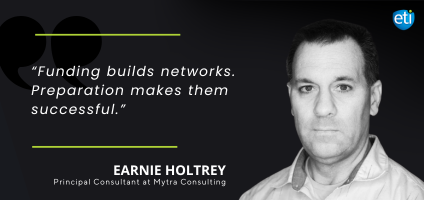
In this episode of The Broadband Bunch, Brad Hine speaks with Earnie Holtrey, Principal Consultant at Mytra Consulting and former Deputy Director of the Indiana Broadband Office. His experience spans state policy, grant program design, and consulting, offering a 360-degree view of broadband deployment in the BEAD era.
What Is Broadband Readiness (and Why It Still Matters)
Broadband readiness is a critical success factor.
Earnie helped lead Indiana’s “Broadband Ready Communities” initiative, which focused on helping local governments remove friction from deployment. That included:
-
Establishing a single point of contact for broadband projects
-
Streamlining permitting timelines
-
Accepting digital submissions instead of manual paperwork
-
Ensuring fair access for all providers
These may sound simple, but they solve real bottlenecks. Delayed permits, unclear communication, and inconsistent local policies continue to slow broadband projects across the country.
Key takeaway: Communities that prepared early are now better positioned to succeed as BEAD construction begins.
The Real Challenge: Turning BEAD Funding into Deployment
The BEAD program represents a historic investment in broadband. But funding alone doesn’t guarantee results.
As projects move forward, ISPs must manage:
-
Complex grant requirements
-
Ongoing compliance and reporting
-
Multi-state project coordination
-
Workforce and permitting challenges
Large providers often have experience handling federal funding. Smaller and mid-sized ISPs, however, may be navigating these processes for the first time.
Many ISPs know how to build network, but not all are prepared for the paperwork, reporting, and compliance that come with federal funding.
Why Compliance and Reporting Will Define Success
One of the biggest risks in BEAD isn’t construction but compliance.
Projects involve multiple layers of coordination:
-
Engineering and construction teams
-
ISPs managing deployments
-
State broadband offices overseeing progress
-
Federal agencies requiring detailed reporting
Breakdowns at any point can lead to delays, penalties, or even funding issues.
This is where consulting firms like Mytra Consulting play a key role—helping ISPs:
-
Build reporting workflows
-
Track project milestones
-
Ensure compliance with grant requirements
-
Align operations across multiple states and timelines
Bottom line: Operational discipline matters just as much as technical execution.
The Opportunity (and Risk) for Smaller ISPs
BEAD funding is opening the door for smaller providers to take on larger projects than ever before.
Many of these ISPs:
-
Have strong local relationships
-
Understand their communities deeply
-
Bring agility and innovation
However, they may lack:
-
Experience with federal grants
-
Internal compliance infrastructure
-
Scalable reporting processes
This creates both opportunity and risk.
ISPs that prepare now—by investing in processes, partnerships, and internal readiness—will be far more likely to succeed.
Will BEAD Achieve “Internet for All”?
Will BEAD fully close the digital divide?
Earnie points to early analysis suggesting that some locations may still be left unserved. Challenges include:
-
High-cost rural deployments
-
Provider defaults or project delays
-
Technology trade-offs and funding constraints
Future solutions may include:
-
State-led programs to fill remaining gaps
-
Line extension initiatives
-
Additional funding mechanisms
Reality check: BEAD is a major step forward, but it may not be the final step.
How State Broadband Offices Are Evolving
State broadband offices are undergoing a major transformation.
Historically focused on policy and planning, they are now becoming:
Their role will likely continue evolving as BEAD projects unfold and post-BEAD gaps emerge.
Why In-Person Collaboration Still Matters
Despite digital tools and remote communication, Earnie emphasizes the continued importance of industry events and face-to-face conversations.
Conferences and regional events provide:
-
Real-world insights beyond press releases
-
Direct feedback from ISPs and state leaders
-
Opportunities to align across stakeholders
In a rapidly changing environment, those conversations can make a meaningful difference.
Final Thoughts: Preparation Is the Differentiator
Funding is flowing. Projects are launching. Expectations are high.
The difference between success and failure will come down to preparation.
ISPs, communities, and partners that focus on:
-
Process readiness
-
Compliance and reporting
-
Clear communication
-
Strategic planning
will be best positioned to deliver on the promise of BEAD.
People Also Ask (FAQ)
What is broadband readiness?
Broadband readiness refers to how prepared a community is to support broadband deployment, including permitting processes, communication systems, and local policies that enable faster network builds.
What is BEAD funding?
BEAD (Broadband Equity, Access, and Deployment) is a federal program providing billions of dollars to expand high-speed internet access across the United States, particularly in underserved areas.
Why is compliance important in broadband grants?
Compliance ensures that ISPs meet federal and state requirements tied to funding. Failure to meet these requirements can result in delays, penalties, or loss of funding.
Will BEAD solve the digital divide?
BEAD will significantly expand access, but some gaps may remain due to cost, geography, or project challenges. Additional programs may be needed to achieve full coverage.
What challenges do ISPs face with BEAD?
Key challenges include managing compliance, reporting requirements, workforce limitations, permitting delays, and coordinating projects across multiple regions.
Frequently Asked Questions (FAQ)
What does it mean for a community to be broadband ready?
A broadband-ready community has the processes, policies, and leadership in place to support fast and efficient network deployment. This includes streamlined permitting, a single point of contact for providers, digital application systems, and fair, consistent rules for all ISPs.
What is the BEAD program and why is it important?
The Broadband Equity, Access, and Deployment (BEAD) program is a federal initiative designed to expand high-speed internet access across underserved and unserved areas in the United States. It represents one of the largest investments in broadband infrastructure and aims to close the digital divide.
What challenges do ISPs face with BEAD funding?
ISPs face several challenges, including navigating complex compliance requirements, managing detailed reporting, coordinating multi-state projects, securing workforce resources, and handling permitting delays. Smaller providers may also lack experience with federal grant programs.
Why is compliance and reporting critical in broadband projects?
Compliance ensures that ISPs meet all federal and state funding requirements. Accurate reporting tracks progress, validates spending, and keeps projects aligned with grant agreements. Poor compliance can lead to delays, penalties, or loss of funding.
How can ISPs prepare for BEAD deployment?
ISPs can prepare by building internal processes for compliance and reporting, strengthening workforce planning, streamlining project management workflows, and partnering with experienced consultants. Preparation during early phases can prevent costly delays later.
Will BEAD funding connect every unserved location?
While BEAD will significantly expand broadband access, some locations may still remain unserved due to high deployment costs, geographic challenges, or project limitations. Additional funding programs or state-led initiatives may be needed to close remaining gaps.
What role do state broadband offices play in BEAD?
State broadband offices manage BEAD funds at the state level. Their responsibilities include awarding grants, overseeing compliance, tracking project progress, and ensuring that deployment aligns with federal guidelines and state priorities.
Why are smaller ISPs important in broadband expansion?
Smaller ISPs often have strong local relationships and a deep understanding of the communities they serve. They can be more agile and innovative, but may require additional support to handle the complexity of large-scale federal funding programs.
What happens after BEAD funding is spent?
After BEAD, remaining coverage gaps may be addressed through state programs, line extension initiatives, or future federal funding. The focus will likely shift to maintaining networks, upgrading infrastructure, and ensuring long-term sustainability.
Why is broadband readiness more important now than ever?
As funding transitions into active deployment, delays caused by poor planning, permitting bottlenecks, or lack of coordination can significantly impact timelines and costs. Communities and providers that are prepared will move faster and deliver better outcomes.
© 2026 Enhanced Telecommunications.